Mesh WiFi vs Range Extender: Which Actually Fixes Slow WiFi in 2026?
Mesh WiFi vs Range Extender: Which Actually Fixes Slow WiFi in 2026?
Mesh WiFi vs Range Extender: The Core Difference
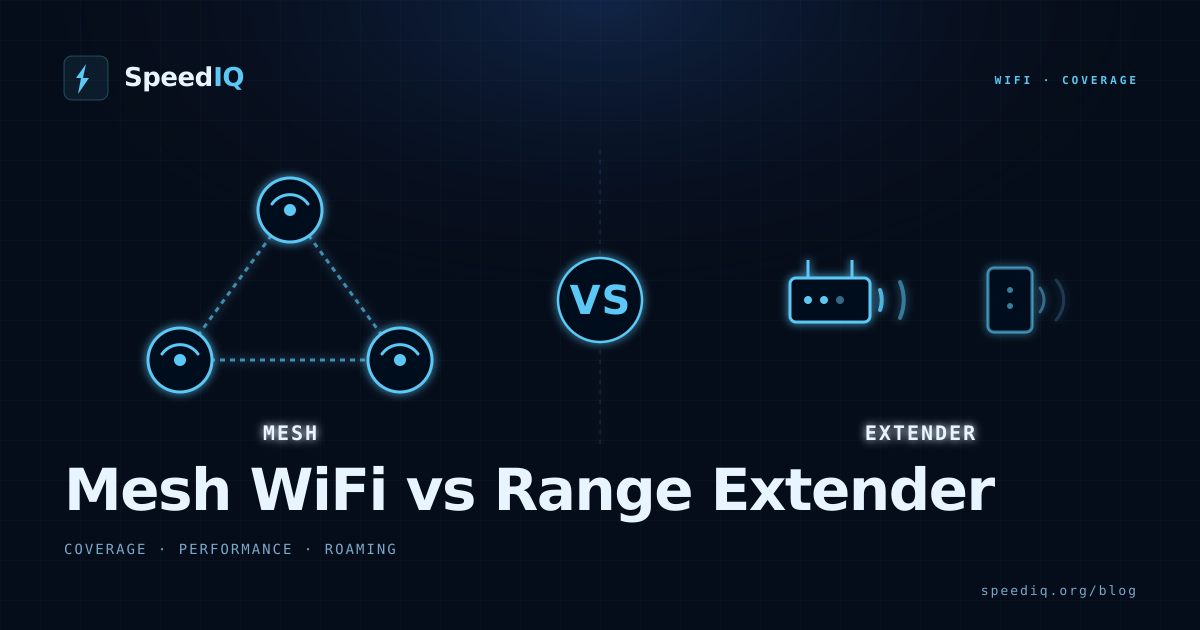
Mesh WiFi and range extenders both promise to fix slow WiFi in distant rooms — but they work very differently and produce very different real-world results. A mesh system uses multiple coordinated access points that act as one network with seamless handoff. A range extender repeats your existing signal, usually halving throughput in the process.
How Range Extenders Work
A range extender connects to your router's existing WiFi signal and rebroadcasts it. The problem: the extender must receive and retransmit on the same channel, cutting available throughput by roughly 50% for devices connected to the extender.
How Mesh WiFi Works
A mesh WiFi system consists of a primary router and one or more satellite nodes. These nodes communicate with each other using a dedicated backhaul connection. Because the backhaul is separate from the client connection, devices connected to any node get near-full-speed access to the internet without the halving effect of a range extender.
Which Should You Choose?
- Choose mesh if: Your home is larger than 100 m², you have thick walls, you need seamless roaming, or you want consistent speeds throughout.
- Choose a range extender if: Your budget is tight, you only need to extend coverage to one additional room, and speed is less critical in that area.
Summary
For most modern homes larger than 100 m² or with thick walls, a mesh WiFi system delivers significantly better results than a range extender. A range extender is cheaper and easier to set up but typically reduces speed by 40–70% at the extender.
Part of the Vatha network.